

News

Re-centralizing the Human in More-Than-Human
Written by Bastiaan van Manen In the context of the current environmental crisis that our planet is facing, more and more disciplines are refocusing their attention on taking what Lupton (2019) has dubbed a more-than-human approach to understanding the world. This perspective involves recognizing the various ways in which the human and the “nonhuman”…
Read more
How Growing and Eating Sea Kale Can Be Considered a More-Than-Human Approach
Written by Kas van der Molen The Wadden Islands – stretching from the northwest of the Netherlands through Germany all the way up to the west of Denmark – are environmentally fragile and protected areas. One of the remarkable aspects of the area is that the sea is completely drained on low tide,…
Read more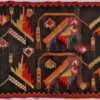
Rethinking the Traditional Moldovan Carpet as a Medium of Symbiosis between Human, Nonhuman and Culture
Written by Nicoleta Cîrlig Moldovan Traditional Carpet. Source: Diez.md. Deborah Lupton describes animism as a term used in sociocultural theory to refer to the attribution of life, human characteristics or spirituality to phenomena that are otherwise culturally considered non-living or nonhuman. It is a relational perspective that views humans and nonhumans as interconnected…
Read more
[urban interfaces] Newsletter February 2020
Our first [urban interfaces] newsletter is now live! You can check it out here. To receive updates about [urban interfaces], and learn about interesting events, calls for papers, talks, and more, subscribe to our newsletter here!
Read more
Pressure Cooker Workshop: Designing More-Than-Human Cities
In this workshop, students from different programs and academies collaborate on an interdisciplinary urban design assignment. The specific focus of the workshop is to develop creative design for more-than-human cities. This deals with the question of how our cities can become more sustainable – both socially and ecologically – by taking into account the diverse…
Read more